

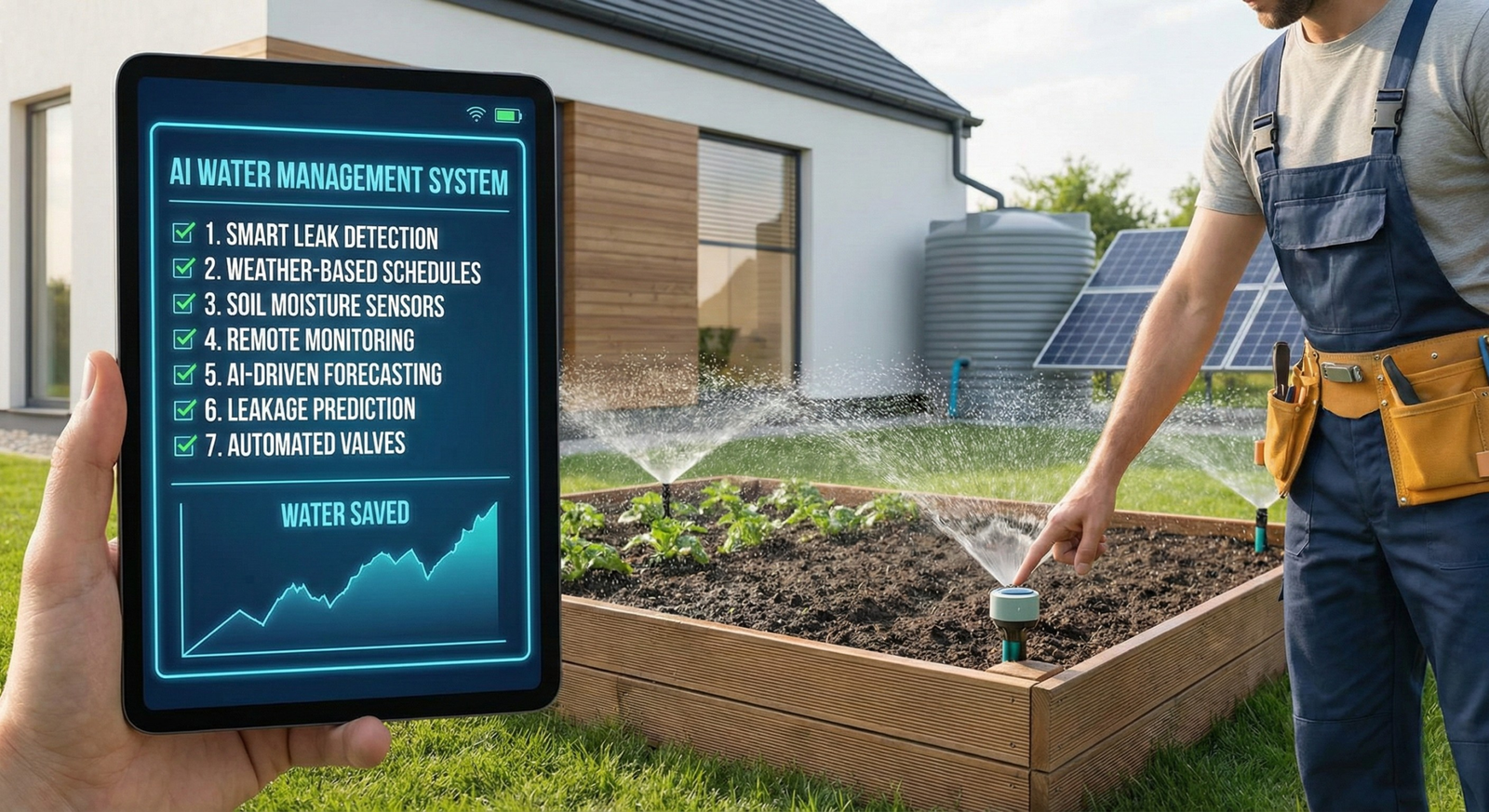
AI Water Management System technology is rapidly transforming the way homeowners, property managers, and utilities monitor and control water use, promising faster leak detection and smarter resource management. Here’s how these advanced systems are reshaping water sustainability—and what you need to watch out for before investing.
Key Takeaways
- The global AI Water Management System market is growing fast, projected to surpass $24 billion by 2031 as smart leak detection and optimization go mainstream.
- AI integration cuts water utility energy use by up to 25% and maintenance costs by 25%, but specific product costs and real-world user savings are not widely reported yet.
- Adopting AI solutions can pose challenges in reliability and retrofitting for older homes, and the technology is still maturing with limited user feedback available.
- The Core Concept of AI Water Management Systems
- Step-by-Step Guide: How to Adopt an AI Water Management System
- Advanced Analysis & Common Pitfalls
- Conclusion
- FAQ
The Core Concept of AI Water Management Systems
An AI Water Management System integrates advanced sensors, Internet of Things (IoT) devices, and artificial intelligence algorithms to provide continuous, automated monitoring of your water usage, leak detection, pump performance, demand forecasting, and even water quality. Unlike old-fashioned water monitors that simply track flow or pressure, AI-driven solutions process high volumes of real-time data and learn patterns unique to your property. This means they can flag anomalies before small leaks become floods—or alert you about unexpected surges in utility bills.
AI Water Management Systems are poised to reshape the global water market, expected to hit $24.45 billion by 2031, thanks to rapid adoption across both new builds and retrofits. The US alone is investing heavily—$10.8 billion projected in digital water solutions by 2030, according to industry research. The main attractions:
- Proactive leak detection and shutoff
- Automated pump and treatment plant optimization
- Asset health forecasting and reduced service disruption
- Scalable data-driven management for homes and city utilities
Global leaders like Veolia are gaining share by focusing on digital monitoring and efficiency, while the fastest growth is seen in Asia-Pacific urban markets where water insecurity is acute (over 75% water insecure).
Step-by-Step Guide: How to Adopt an AI Water Management System
- Assess Your Property’s Needs
- Inventory current plumbing: age, material, meters, visible leaks, and water usage trends.
- Decide if you want whole-home smart monitoring, just leak detection, or full utility management (for large buildings or business premises).
- Research Technology Providers
- Look for companies that offer IoT-based water sensors, AI-enabled analytics, and remote control apps—compare features like real-time alerts and historical data visualization.
- Request demo calls, ask about case studies, and verify if the system supports integration with your smart home setup. Browse reviews, if available.
- Consider Installation Options
- Some AI water monitors require direct plumbing integration by a licensed plumber, while others are clamp-on or retrofit units that can be installed with basic DIY skills.
- Factor in installation fees and whether you’ll need to upgrade older plumbing to support sensor connectivity.
- Understand Ongoing Costs
- Check for required monthly subscription fees covering AI analytics and cloud storage.
- Inquire about regular sensor calibration, software updates, or maintenance plans.
- Activate and Calibrate the System
- Connect the monitoring system to your network, download the control app, and follow in-app calibration to set optimal thresholds for leak alerts and usage tracking.
- Review historical data after a few weeks to spot trends or adjust settings as needed.
- Set Up Alerts and Reporting
- Enable push notifications, email, or SMS alerts for abnormal usage or leak detection. Many systems allow custom alert rules for different zones of the property.
- Schedule regular reports to your phone or inbox so you can spot changes in real usage patterns and respond quickly.

Need even more ways to optimize home efficiency? Try pairing AI water monitoring with other smart home upgrades, such as voice assistants or smart thermostats, to further automate and reduce costs across the board.
Advanced Analysis & Common Pitfalls
While the promise of AI-powered water systems is huge, practical challenges remain—especially for homeowners and building managers looking to balance cost, reliability, and overall value.
Common Pitfalls
- Upfront & Hidden Costs: There’s limited transparency in the industry about total installed cost, recurring subscription/service fees, and potential costs to retrofit older plumbing. Few vendors publish sample bills.
- Reliability & False Alarms: There is little independent user data online about how often AI water monitors issue false positives, trigger nuisance alerts, or misread usage spikes. Early adopters report mixed results.
- Integration with Existing Smart Tech: Not every AI water system plays nicely with every smart home ecosystem, so check compatibility with your current setup before purchasing.
- Retrofitting Old Homes: Older copper or galvanized pipes, complex plumbing, or lack of WiFi coverage can make installation much harder or require professional help—raising costs considerably.
- Data Privacy: Because these systems collect usage data and transmit it via cloud servers, always verify what privacy safeguards are in place and who can access your household’s data.
Comparison: Traditional vs. AI Water Monitoring
| Feature | Traditional Water Monitors | AI Water Management Systems |
|---|---|---|
| Sensing Technology | Measures flow, basic pressure | IoT/multi-sensors: flow, pressure, pH, turbidity |
| Detection Approach | Reactive—alerts after leaks happen | Predictive—spots trends and warns before issues |
| Data Processing | Basic threshold triggers | Machine learning & digital twins for advanced insights |
| Energy & Cost Savings | Minimal impact | 15-25% energy reduction, up to 25% maintenance savings (source) |
| Data Accuracy Rate | Limited data, basic accuracy | No published comparative accuracy data yet |
| Integration | Isolated devices | Cloud dashboards, mobile apps, smart home linking |
Before committing, weigh these factors and set realistic expectations on payback time, integration ease, and long-term maintenance. If your goal is a broader sustainable home, check out our guide on renewable energy systems and urban infrastructure solutions.

Conclusion
AI Water Management System technology is leading a new era of sustainable home and building automation, with big potential for energy and cost savings. However, lack of transparent pricing, limited user reliability data, and integration headaches are all hurdles you should factor into your decision. Take time to research options, request product demos, and ensure compatibility with your property’s plumbing and smart home systems before investing.
Ready to explore smart water monitoring? Compare available AI Water Management System options, ask tough questions about costs and reliability, and don’t hesitate to consult a smart home professional to ensure you get the setup best suited to your needs. For extra efficiency, pair water monitoring with other home improvement strategies for a truly future-proof home.
FAQ
How much do AI Water Management Systems cost to install and maintain?
Costs vary widely. There is little transparent pricing information, but expect to pay for hardware, installation (especially in older homes), and possibly monthly software subscriptions for analytics or support. Always request a detailed quote and ask about future price increases or required upgrades.
Will AI water monitoring work in older homes or with non-standard plumbing?
It depends on the system. Some offer clamp-on or retrofit sensors that do not require cutting pipes—ideal for older or rental homes. Others may need direct integration. Always confirm compatibility before purchase.
Can these systems cut my water or energy bills?
There is strong evidence that AI water management can reduce energy use by 15-25% for utilities and potentially lead to lower bills, but specific real-world case studies for individual homes or buildings are still scarce. Savings will depend on your usage patterns, local rates, and previous leak issues.
What data privacy risks come with AI Water Management Systems?
These systems often collect and store water usage data in the cloud. Check each vendor’s privacy policy to see how your data is used, stored, and protected. Choose companies with transparent policies and consider if you want automatic reporting of usage to third parties.
Is integration with smart home devices, like Amazon Alexa or Google Home, possible?
Many AI Water Management Systems offer app-based control or integration with other smart devices, but support is not universal. Always check if your chosen system explicitly supports your smart home ecosystem before buying.
 Email Submit Button: “Get Free Guide Now”
[…] flower borders, vegetable patches, or large commercial landscapes. They are frequently paired with AI water management systems, drought resistant plants, and even rain gardens for a bigger water-saving impact. These setups […]