

Table of Contents
Self leveling compound is a crucial material for achieving smooth, durable, and even surfaces before laying a final floor covering. Popular in both residential and commercial projects, it ensures flooring installations last longer and look better. This article explores what self leveling floor compounds are, their advantages, types, application guidelines, and tips for achieving the best results.
Understanding Self Leveling Compounds
Self leveling compounds, also called self leveling floor compounds, are a specialized class of cementitious products engineered for the express purpose of creating even, smooth surfaces on interior subfloors. Unlike conventional screed or mortar, self leveling compounds are distinguished by their unique flowability and chemical formulation. At the core of these compounds is a blend of high-performance Portland cement or gypsum-based binders, finely graded aggregates, polymer additives, and flow agents. This precise composition allows the mixture, once combined with water, to form a low-viscosity slurry. Upon pouring, the compound automatically spreads out and settles, effortlessly seeking its own level with minimal manual intervention.
What sets self leveling compounds apart in the world of construction is their ability to form a perfectly flat, uniform layer over substrates riddled with dips, undulations, or slight variations in height. The mixture’s thixotropic properties mean that it remains quite fluid during application but quickly transitions to a solid, durable layer as it cures. Advanced polymer additives not only aid workability and smooth spreading, but also enhance adhesion to a wide variety of subfloor types, ensuring robust, long-lasting performance.
Compared to traditional floor screeds and mortars, which require extensive troweling, careful mixing, and hands-on finishing, self leveling compounds are notably less labor-intensive and far more time-efficient. Their rapid curing times—often allowing for foot traffic or subsequent floor covering installation within hours—are a significant advantage on fast-track construction projects. These materials are invaluable for preparing subfloors to the tight tolerances required for modern floor finishes, effectively eliminating minor irregularities that could compromise the aesthetics or integrity of tiles, vinyl, wood, or carpet coverings. By delivering a true surface, self leveling compounds are a foundational element in achieving professional, code-compliant flooring installations.
When and Why to Use Self Leveling Floor Compound
Self leveling floor compound becomes essential in scenarios where a seamless, even substrate is vital for the success and longevity of finished floor coverings. One of the main reasons to apply self leveling compound is to address subfloor imperfections that could otherwise compromise the look and function of the final floor. Unevenness, dips, waves, trowel marks, and minor cracks develop over time in concrete slabs, wood underlayment, or patched areas. These irregularities, if not corrected, can lead to premature wear, instability, or aesthetic issues in the overlying flooring.
In preparation for the installation of tiles, hardwood, vinyl, carpet, or laminate, achieving a uniformly flat and stable base is pivotal. Self leveling compounds provide an efficient and reliable solution by smoothing out minor undulations and filling in small voids. This correction ensures the adhesive or mortar bed beneath tiles or sheet goods performs as intended, which is particularly important for rigid materials like porcelain or stone tile that demand tight tolerance for subfloor variation.
The compound also plays a critical role in meeting professional standards and building codes, many of which specify precise limits for subfloor flatness depending on the flooring type. For instance, industry guidelines might call for no more than a 1/8-inch deviation over 10 feet under resilient flooring. By creating an extremely flat plane, self leveling compound helps meet or exceed these specifications, minimizing callbacks and flooring failures.
Additionally, its application can significantly enhance both the durability and visual appeal of finished floors. Uniform surfaces support proper locking mechanisms in floating floors, mitigate telegraphing of defects, and extend the service life of the floor covering. In commercial and high-traffic environments, these compounds are integral to supporting structural integrity and ensuring a safe, professional result.
Types of Self Leveling Compounds and Their Applications
Self leveling compounds are formulated for specific project needs, and selecting the right type is vital for optimal results. The most common varieties include cement-based, gypsum-based, and polymer-modified blends, each offering distinct advantages and best-use scenarios.
Cement-based self leveling compounds are the most widely used due to their robust durability and versatility. Suitable for concrete, ceramic tile, terrazzo, and even for use over some plywood substrates when properly primed, these compounds cure to a strong, dense surface capable of withstanding heavy loads. Their high compressive strength makes them suitable for commercial and high-traffic residential environments. They are available in moisture-tolerant versions, allowing use in areas such as basements, bathrooms, and laundry rooms. Typical application thicknesses range from 1/8 inch up to 1 inch in a single pour, though some specialized products allow for thicker or thinner applications.
Gypsum-based self levelers, in contrast, are favored for projects where wood substrates, such as plywood or oriented strand board (OSB), are prevalent. Because of their lower alkalinity, they are compatible with a range of adhesives and materials sensitive to cement chemistry. However, gypsum-based compounds are generally not recommended for areas exposed to high levels of moisture, as they are more susceptible to water damage. Their compressive strength is usually lower than cement-based products, making them best suited to residential spaces with light to moderate foot traffic. Standard installation thickness is similar to cement-based types, generally 1/8 inch to 1 inch.
Polymer-modified blends combine either cement or gypsum bases with specialized resins. These compounds provide superior flexibility, adhesion, and crack resistance, making them ideal for challenging substrates or demanding service conditions, such as radiant heating systems or areas with anticipated structural movement.
When choosing a self leveling compound, consider substrate type, exposure to moisture, expected load demands, and required thickness. This ensures compatibility, performance, and longevity of the finished floor.
Step-by-Step Application Process
Applying a self leveling floor compound demands precise execution to achieve a flawless, long-lasting result. Begin with thorough *subfloor preparation*: ensure the base is clean, free of grease, previous adhesives, dust, or debris. Scrape off any paint, remove loose material, and repair significant holes or cracks with patching compound. The subfloor must be dry and structurally sound; check for moisture using a moisture meter, especially over concrete or wood.
Use the primer specified by the compound manufacturer, applying it with a roller or brush and allowing sufficient drying time as per instructions.
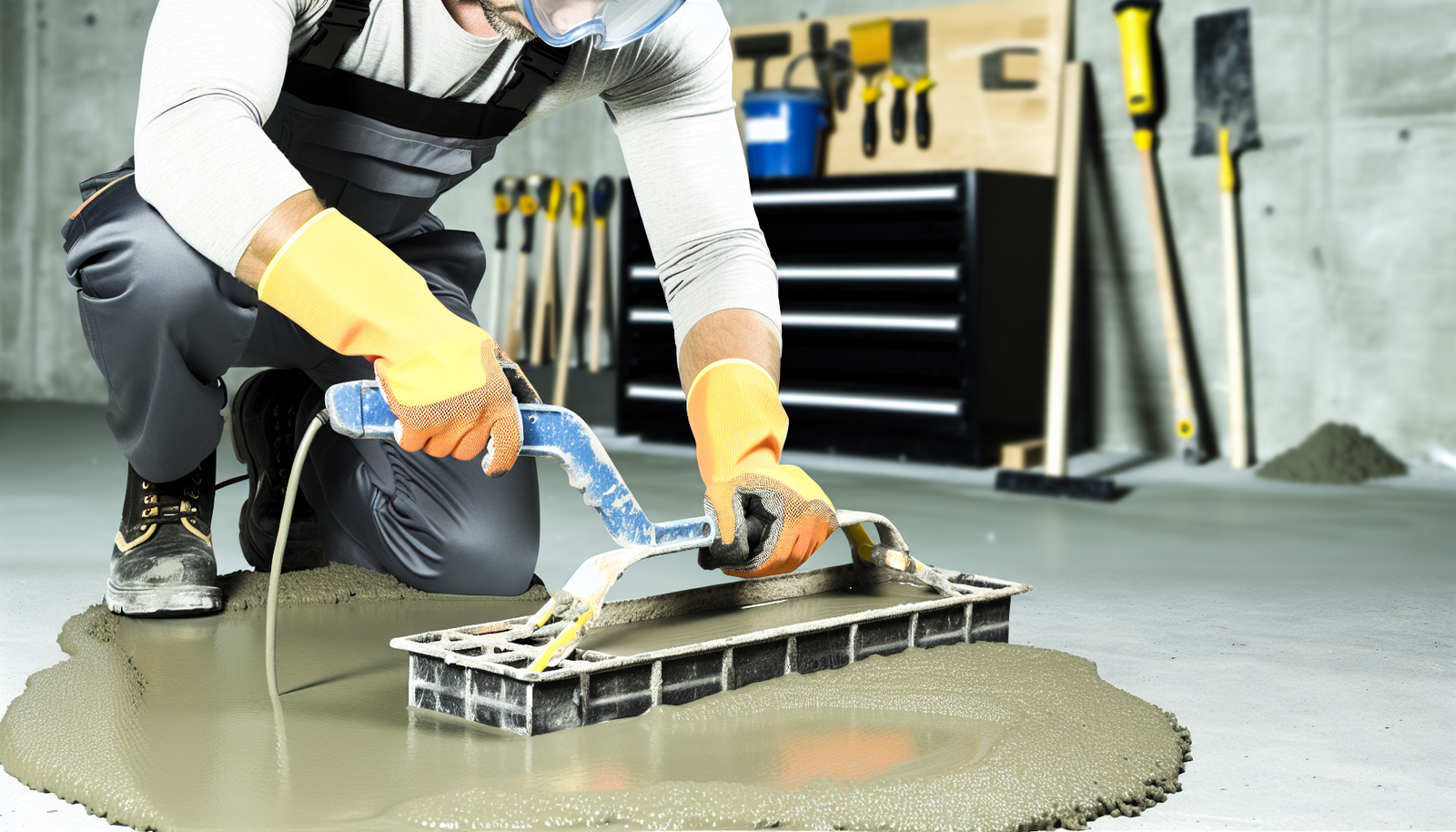
To *mix the compound*, gather an electric drill with a paddle mixer, two clean buckets (one for measuring water, one for mixing), a squeegee or gauge rake, a pin roller (spiked roller), protective gloves, goggles, and knee pads. Read the compound’s technical datasheet carefully. Measure water precisely; too much or too little compromises performance. Pour the powder into the water (not vice versa) and mix for two to three minutes until the mixture is smooth and lump-free.
As soon as mixing is complete, *pour the compound* onto the floor, starting at the furthest corner and working toward the exit. Spread quickly but evenly with a gauge rake, working within the product’s open time—generally 10–20 minutes. Use the spiked roller to remove air bubbles and help the compound settle. Avoid “overworking” the surface, as this can introduce imperfections.
Critical *do’s and don’ts*: Do protect the area from drafts, direct sun, or temperature extremes during curing. Don’t walk on the compound until fully cured, or rush installation of the final flooring. Observe the manufacturer’s recommended cure time before foot or light traffic. Keep the workspace ventilated and wear personal protective equipment for safety at all times. Proper technique is vital to ensure a seamless, robust, and perfectly level base ready for the chosen floor finish.
Tips and Troubleshooting for Best Results
- Ensure Accurate Mixing: Use only the manufacturer-recommended amount of water. Adding too much water can weaken the compound and encourage cracking; too little inhibits flow. Always mix in a clean bucket and, when possible, use a paddle mixer at low speed to avoid introducing air bubbles. After mixing, let the compound stand for a few minutes before a final stir to let trapped air escape and all components hydrate evenly.
- Double-Check Priming Coverage: Skipping or inadequately applying primer is a frequent source of bonding issues. Ensure the entire subfloor, including corners and edges, is evenly coated and allowed to dry as directed. For highly porous or absorbent substrates, more than one coat may be necessary. This crucial step prevents pinholes, air release issues, and potential separation later on.
- Troubleshooting Flow and Leveling: If the compound fails to spread evenly, check if it’s too stiff—perhaps it started setting in the bucket or wasn’t properly mixed. In such cases, halt application and remove affected material. For minor discrepancies in flow, use a spiked roller gently to encourage leveling and burst surface bubbles, but avoid overworking as this may worsen unevenness.
- Managing Height Discrepancies: For areas requiring extra build-up, work in thin layers and allow the previous one to set—never pour excessive thickness at once. For sudden level transitions, use a trowel or screeding tool to feather edges and create a smooth blend.
- Adapting to Environmental Conditions: Fast drying due to high temperature, low humidity, or air movement may cause premature skinning or cracking. In hot or windy climates, work in smaller batches, avoid direct sun, and even lightly mist the area with water after pouring to slow moisture loss.
- Maintenance for Longevity: After full cure, keep the leveled surface free of spills, heavy traffic, and impacts until the final floor is installed. Avoid harsh cleaners; for exposed surfaces, use a compatible sealer to enhance durability and stain resistance.
Conclusions
Self leveling floor compounds are essential tools for achieving flawless flooring foundations. By understanding their characteristics, types, proper application methods, and troubleshooting strategies, homeowners and professionals alike can ensure long-lasting, aesthetically pleasing surfaces that meet high performance standards. Investing time in preparation and careful installation pays off in durable and beautiful finished floors.
Welcome! For more in‑depth product and tech reviews, visit homepaw shub .
 Email Submit Button: “Get Free Guide Now”