

Table of Contents
Attic insulation is a crucial component in any home, significantly influencing energy efficiency, comfort, and long-term savings. This article explores the various types of attic insulation, delving into their characteristics, benefits, and suitability for different spaces. Understanding these options will empower homeowners to make informed decisions that enhance thermal regulation and reduce utility costs.
Understanding Building Insulation and Its Importance
Building insulation refers to the use of materials and methods designed to slow the transfer of heat, sound, or fire between the inside and outside of a structure. In residential buildings, insulation’s primary role is thermal: it limits heat flow into and out of the home, creating a barrier that maintains desirable indoor temperatures regardless of weather conditions. By encapsulating spaces like walls, floors, and attics, insulation supports energy efficiency and comfort.
Beyond thermal control, insulation also provides significant benefits for acoustic comfort. It reduces the transmission of external noise into living spaces and dampens movement of sound between rooms and floors—a valuable function for privacy and quiet. Furthermore, certain insulation materials offer fire-resistant properties, slowing the spread of flames and providing critical time for evacuation during emergencies.
Historically, people have sought ways to insulate their homes for millennia, employing materials like straw, mud, or animal skins. Modern advances have brought more effective solutions like fiberglass, foam, and mineral wool, designed for higher performance and safety standards.
Proper insulation is especially critical in attics, which often account for a large portion of a home’s heat gain or loss due to their direct exposure to sun and weather. A well-insulated attic acts as a thermal buffer, reducing the workload on heating and cooling systems throughout the year. This translates directly into lower energy bills, reduced greenhouse gas emissions, and a smaller environmental footprint.
Homeowners benefit from greater year-round comfort, consistent temperatures, and enhanced property value when attics receive focused insulation attention. Moreover, insulation is a key strategy in climate change mitigation, as it curtails the demand for fossil-fuel-generated heating and cooling. Thus, investing in attic insulation offers both immediate and long-term rewards—boosting building performance while contributing to broader sustainability goals.
Bulk Insulation Materials Used in Attics
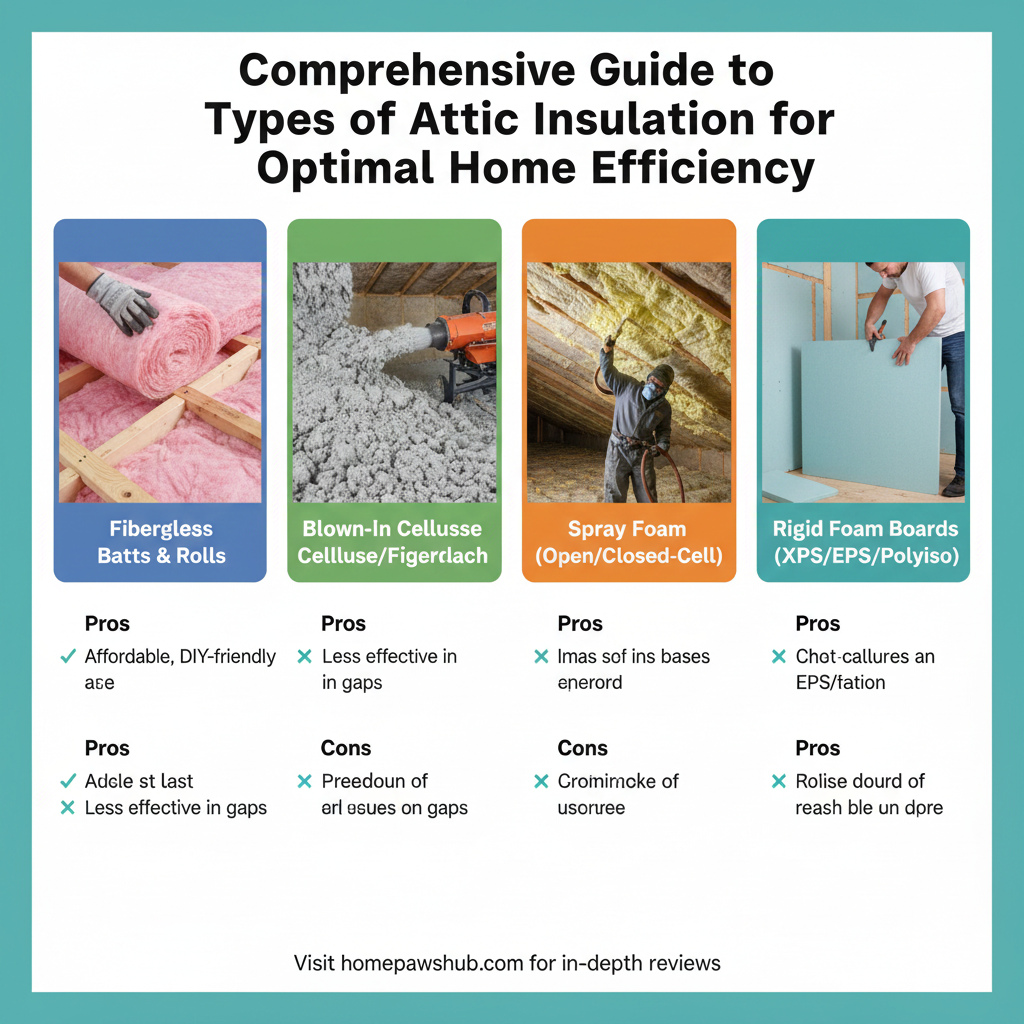
Bulk insulation serves as the thermal backbone in most attic spaces, working by trapping pockets of air within its structure to slow heat transfer. This physical barrier is essential for maintaining consistent indoor temperatures and reducing energy bills. Among bulk insulations, several materials stand out for attic applications:
Fiberglass Batts:
– R-value: Approximately R-2.9 to R-3.8 per inch.
– Installation: Typically comes in pre-cut panels or rolls. Fitted between attic joists/studs for easy DIY or professional installation.
– Pros: Cost-effective, non-combustible, widely available, and relatively easy to install.
– Cons: Performance drops if compressed or installed improperly; fibers can irritate skin and lungs.
– Best For: Homeowners seeking an affordable, accessible solution in unfinished attics with standard joist spacing.
Rock Wool (Mineral Wool):
– R-value: Usually R-3.0 to R-3.3 per inch.
– Installation: Similar to fiberglass, installed as batts or boards. Naturally resists fire, mold, and pests.
– Pros: Superior fire resistance, excellent sound absorption, moisture-resistant.
– Cons: Heavier than fiberglass, pricier, potential skin irritation.
– Best For: Attics requiring enhanced fire or sound insulation, or in humid climates.
Cellulose:
– R-value: Roughly R-3.2 to R-3.8 per inch.
– Installation: Applied as loose-fill, blown into place using specialized equipment, filling gaps and covering irregular spaces.
– Pros: High recycled content, good for retrofitting, fills gaps well.
– Cons: Can settle over time, reduced effectiveness if wet, requires professional installation.
– Best For: Retrofitting older homes or attics with many obstructions.
Spray Polyurethane Foam:
– R-value: Closed-cell types offer R-6.0 to R-7.0 per inch, open-cell slightly less.
– Installation: Sprayed directly onto surfaces; expands to seal cracks and gaps.
– Pros: Highest R-value per inch, air-sealing properties, moisture barrier, eliminates most drafts.
– Cons: Significant cost, requires professional application, chemical emissions during curing.
– Best For: Attics needing maximum thermal efficiency, complex layouts, or in extreme climates.
Each of these materials brings specific strengths and limitations. Your attic’s design, local climate, and project scope will determine the most appropriate choice, often combining bulk and reflective insulations for optimal energy performance.
Reflective and Radiant Barrier Insulation Options
Reflective insulation and radiant barriers offer a distinctly different approach to attic efficiency when compared with bulk insulation options. While traditional insulations impede heat flow primarily by slowing conduction and convection, reflective insulation and radiant barrier materials are engineered specifically to thwart radiant heat transfer—the type of heat that moves in waves from the sun, particularly effective in attic spaces exposed to intense solar gain.
Reflective insulation generally consists of one or more layers of aluminum foil, often bonded to kraft paper, plastic film, or even bubble wrap for added structure. Radiant barriers, meanwhile, usually feature a single layer of highly reflective aluminum foil, which is installed facing an open air space, most commonly on attic rafters, under roof decking, or occasionally atop attic floor insulation.
These materials function by reflecting radiant heat—up to 97% in some cases—rather than absorbing it. This means that in hot climates where attics can become superheated by sunlight, radiant barriers and reflective insulation can significantly reduce the amount of heat entering the living space below, thus lowering cooling costs and increasing indoor comfort. Their effectiveness in hot, sunny climates is well-documented, making them a favored solution in southern states or wherever air conditioning demands are high.
In contrast, their efficacy in colder climates is more limited, as their main advantage is in reflecting downward heat rather than impeding upward heat loss. For this reason, radiant barriers are often not recommended as a stand-alone solution where winter heating efficiency is the primary concern.
When combined with bulk insulation, reflective and radiant barrier options can produce substantial synergies. For example, a radiant barrier installed above fiberglass batts can keep the insulation cooler, thereby improving overall system performance. In attics with ductwork, radiant barriers help prevent heat gain in ducts, enhancing HVAC system efficiency. This complementary approach is ideal for maximizing home performance, particularly in mixed or hot climates where both radiant and conductive heat exchanges play significant roles.
Selecting the Right Insulation for Your Attic
Selecting the right insulation for your attic involves carefully weighing several important factors that go beyond material type and cost. To begin, climate plays a pivotal role: in colder regions, homeowners often benefit from thick layers of loose-fill cellulose or fiberglass batts due to their superior ability to trap heat within the home. Conversely, spray foam insulation or reflective barriers can excel in warmer climates by keeping radiant heat out. Understanding your regional weather patterns and temperature swings is key to optimizing comfort and efficiency.
Budget is another consideration. While blown-in cellulose and fiberglass are cost-effective and relatively simple to install in most attics, high-performance options like closed-cell spray foam or hybrid systems combining radiant barriers with batt insulation carry a higher upfront cost but deliver longer-term energy savings and air sealing benefits. For homeowners renovating on a budget, layering new insulation over existing materials can boost effectiveness without a complete overhaul.
The layout and accessibility of your attic also matter. For attics with irregular joist spacing or significant obstructions, blown-in insulations fill nooks and crannies effectively. In contrast, open attics with standard joist bays are well-suited for batt or roll insulation that can be easily measured and placed. If your attic has ductwork or is part of a conditioned living space, consider advanced air sealing with spray foam to prevent energy loss.
Environmental impact is increasingly relevant. Opt for cellulose insulation made from recycled materials or formaldehyde-free fiberglass for a greener choice. In cases where allergies or chemical sensitivities are a concern, natural wool or cotton insulations may be preferable.
Ultimately, a professional assessment is invaluable. Insulation specialists can analyze existing materials, check for moisture or ventilation issues, and recommend tailored solutions that maximize energy savings and comfort based on your unique home configuration.
Installing and Maintaining Attic Insulation for Lasting Benefits
Installing attic insulation begins with understanding the process for each primary type. Blanket insulation (batts and rolls) can be a DIY-friendly choice for accessible attics. Homeowners place the pre-cut fiberglass or mineral wool strips between joists, taking care to avoid compressing the material. While DIY installation saves on labor costs, it requires proper safety measures due to irritation risks, and mistakes like gaps or compression can reduce effectiveness. Professionals, in contrast, ensure a tighter fit and consistent installation, especially valuable in irregular or hard-to-reach spaces.
Blown-in (loose-fill) insulation, typically cellulose or fiberglass, uses a machine to disperse insulation evenly across the attic floor. For small projects, homeowners can rent equipment; however, uniform coverage is challenging without experience. Professionals provide a thorough, even layer that minimizes voids and maximizes efficiency, justifying the additional cost.
Blown-in (loose-fill) insulation, typically cellulose or fiberglass, uses a machine to disperse insulation evenly across the attic floor. For small projects, homeowners can rent equipment; however, uniform coverage is challenging without experience. Professionals provide a thorough, even layer that minimizes voids and maximizes efficiency, justifying the additional cost.
Spray foam insulation (open-cell or closed-cell) is almost always best left to professionals. The process involves mixing chemicals onsite and applying under pressure to rafters or attic floors. It forms an air and moisture barrier while expanding to seal gaps. Improper installation is hazardous and can lead to subpar performance or health concerns.
After installation, ongoing maintenance is crucial. Homeowners should periodically check insulation for signs of moisture intrusion—from roof leaks or condensation—which can degrade all types. Ensuring proper attic ventilation prevents moisture buildup, thus avoiding mold and mildew. Check for evidence of pests; rodents and insects can tunnel through or nest in certain insulations, particularly loose-fill types.
Over time, some insulation, especially blown-in, can settle or compact, reducing its R-value. Regular inspections—ideally every few years—help spot these issues early. Upgrading or topping up insulation may be necessary as it ages or when energy performance drops. A well-maintained attic insulation system ensures ongoing comfort, lower bills, and lasting efficiency.
Conclusions
Attic insulation plays a pivotal role in home comfort, energy efficiency, and sustainability. By understanding bulk, reflective, and radiant barrier options—and choosing based on your attic’s specifics—you can significantly enhance your living environment. Proper installation and maintenance ensure that these benefits last, making insulation a valuable investment in your home’s future.
Welcome! For more in‑depth product and tech reviews, visit homepaw shub .
 Email Submit Button: “Get Free Guide Now”
[…] about full-home energy optimization? Explore optimal attic insulation strategies as a companion to circadian lighting for whole-home […]
[…] available for U.S. homes. For energy efficiency, pairing with premium insulation (as shown in our attic insulation guide) amplifies results, especially in larger homes or those with outdated […]