

Table of Contents
Refresh your home with thoughtful decor that blends everyday style and Christmas cheer. This article examines interior design basics, the history and symbols of Christmas decor, smart shopping at retailers like The Home Depot and local home decor stores, creative wall decor ideas, and a seasonal plan to organize purchases, budgets, and sustainable choices for a cohesive, stylish home.
Foundations of home and decor
Interior design is both an art and a science—its core purpose is to improve your indoor environments for aesthetic enjoyment and genuine well-being. A well-designed home enhances functionality, lifts mood, and provides comfort. Achieving this doesn’t happen by accident; it combines planning (like measuring and mapping), research (exploring styles, understanding how colors interact), and thoughtful execution (choosing paint, furniture, or wall decor that serve you practically and visually).
- Balance: Achieve visual equilibrium by distributing elements evenly. Symmetrical balance suits traditional décor, while asymmetry adds energy to modern spaces. Pair two armchairs with a sectional sofa, or flank a large painting with sconce lights.
- Scale and Proportion: Keep furniture and décor sized appropriately for your room. A sofa should generally run two-thirds the width of the wall it sits against, while art above it looks best at around 60% of the sofa’s total width.
- Rhythm: Lead the eye and create interest using repetition and patterns—mirrored pillows, repeated colors, or a row of similar vases, for example.
- Emphasis (Focal Points): Anchor rooms with one element—like a fireplace, oversized art, or a decorated Christmas tree—that immediately draws attention.
- Harmony, Contrast, Unity: Use related tones and styles for harmony (like all neutrals), introduce contrast with metal light fixtures against rustic wood, and tie everything together through repeating colors or motifs for unity.
Color, texture, and material choices dramatically influence mood. Cool colors (blues, greens) soothe; warm hues (reds, golds) energize. Anchor with neutrals, adding seasonal or bold accents. Pair chunky knits and distressed wood for modern farmhouse, sleek walnut and velvet for mid-century, or crisp whites and metals for minimalist styles. Mixing glass ornaments with wooden trays references both tradition and trend.
Lighting strategy is key—layer fixtures for ambient (overhead), task (reading lamp), and accent (art spotlights or string lights at Christmas). Swap bulbs for warmer shades or add dimmer switches for versatility.
Space planning and flow:
- Measure rooms and walkways; allow 30–36 inches for high-traffic areas.
- Arrange seats to face each other for conversation.
- Point furniture and lighting to your chosen focal point (fireplace, TV, tree, art).
Budgeting and prioritization: Tackle paint first (biggest impact per dollar), then textiles (pillows, curtains), statement wall art, and lighting upgrades. Invest in accent chairs or sturdy tables; DIY thrift finds for accessories.
Wall decor acts as both anchor and bridge, uniting color and style, and drawing attention. Center large artwork at 57–60 inches above the floor; for a gallery wall, keep 2–3 inches between frames. Let art interact with surrounding lighting, furniture, and, for the holidays, string lights or garlands for seamless integration.
- Action Plan:
- List what you love most about your space and what needs improvement.
- Pick one focus: balance (rearrange chairs), color (try new pillows), or lighting (add a reading lamp).
- Measure art and furniture for quick fixes (move art to eye level, space sofa 8” from the wall).
- Visit a local home decor store, like Home Depot or a boutique nearby, to test materials and get inspiration, then implement one upgrade this week.
Christmas home decor traditions and trends
- Historical and symbolic roots
- The Christmas tree traces its origins to ancient fir and evergreen displays by Romans and Germans as signs of life and renewal during winter. By the 16th century, Germans began indoor trees, symbolizing everlasting life and hope.
- Wreaths—formed in circles of evergreen—derive from pre-Christian Europe, meaning continuity and eternity, while the Advent wreath (four candles in a circle) marks the wait for Christmas with each candle representing a week of Advent.
- Stars recall the Star of Bethlehem, a guiding symbol, often topping trees since the Victorian era.
- The colors red (Christ’s sacrifice, berries), green (eternal life), and gold (light, generosity, wealth) are deeply traditional and consistently used in Christmas decor.
- Evolution of decor
- Early decor involved apples, nuts, and candles on trees; 19th-century German immigrants introduced these customs to America. By the late 1800s, glass ornaments appeared, and candles gave way to safer electric lights.
- Traditions vary: some begin decorating at the start of Advent; others wait until just before Christmas. Removal dates span Twelfth Night (Jan 5), Candlemas (Feb 2), or simply after Epiphany, often guided by family custom or religious tradition.
- Current trends
- Minimal and Scandinavian-inspired decor favors sparse greenery, white lights, and natural elements like wood or paper.
- Maximalist and nostalgic styles layer vintage ornaments, colorful garlands, and heirlooms.
- Eco-friendly and DIY are rising, with handmade garlands, dried orange slices, or reused fabric ribbons.
- Modern palettes include monochrome (all-white, green-on-green) or mixed-materials—brass with eucalyptus, or velvet and rattan.
- Practical styling guidance
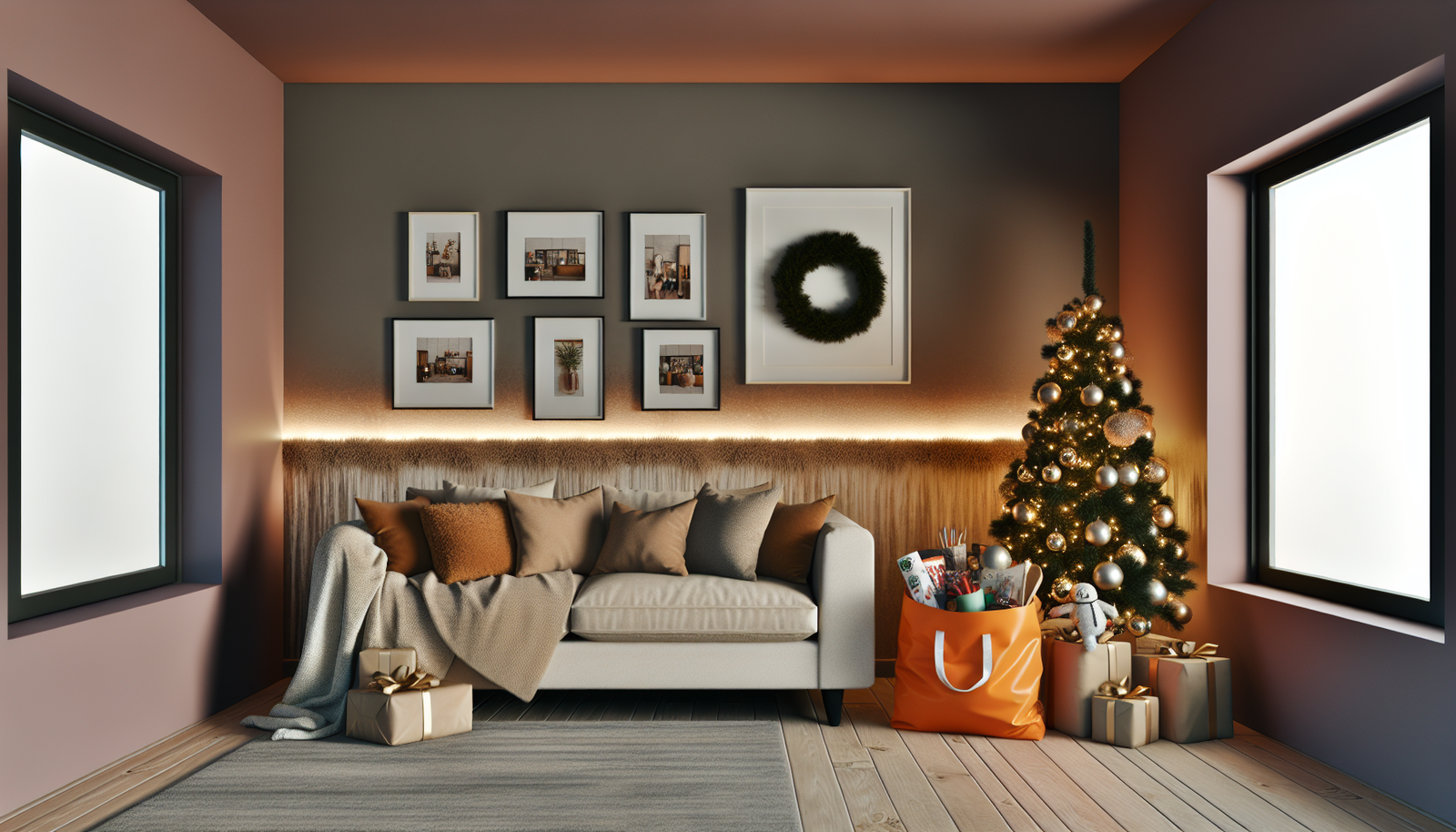
- Living room: Anchor with a tree near a visible window, away from heat sources for safety. Layer soft throws and pillows in the season’s palette. Add LED-lit garlands for accent.
- Entryway: Hang a bold wreath on the door (opt for fresh or sustainably sourced). Add lanterns or grouped candles.
- Dining table: Use a simple runner, a natural centerpiece (pine, berries), and reusable cloth napkins.
- Mantel: Mix stockings, an Advent calendar, and low-heat LED string lights. Avoid blocking vents; anchor with a focal art piece or star.
- Safety: Use lights rated for indoor/outdoor use; NEVER overload outlets. Water live greenery to extend life; check for fire-safe ornament materials.
- Material and sourcing suggestions
- pre-lit trees for efficiency and safety. Seek reusable ornaments like glass, metal, or wood for longevity.
- Select sustainable wreaths, or DIY with local pine boughs and eco-friendly ribbon.
- For a cohesive look, mix ornament sizes and shapes but select a consistent palette—metallics, naturals, or a duo such as red and gold.
- Checklist for a stress-free holiday
- 6–8 weeks before: Inventory last year’s decor; order new sustainable or replacement items.
- 2–3 weeks before: Set up outdoor lights, check indoor string lights, buy tree (live or artificial).
- 1 week before: Trim the tree, set mantel and table decor, style entryway.
- Day-of: Replace candles, refresh greenery, add last-minute florals.
- Afterward: Sort decor: wrap glass in tissue, use labeled bins, store in a dry, cool area to avoid damage.
Styling exercise: Select a holiday color story (such as icy blue and silver, or forest green and gold). Identify three main display points—perhaps your living room tree, dining table centerpiece, and entryway wreath. Commit to one reusable decor element you’ll reintegrate every year (like a handmade star or heirloom glass ornament), building lasting tradition and style with each season.
Where to shop and how to choose
- Retailer overview The Home Depot stands out as a top destination for both year-round and holiday home decor. Its sheer scale ensures consistent stock of essentials—tree stands, string lights, pre-lit trees, ornaments kits, garlands, plus power tools, hardware, and garden center florals. Big-box stores like The Home Depot deliver broad selection, one-stop-shopping, and services such as in-home installation for lighting or hanging large decor pieces. Their extended holiday hours and price-matching policies make them reliable for last-minute needs or bulk purchases—ideal for outfitting an entire home for Christmas or starting a new decor project any time of year.
- Specialty and boutique stores Independent decor shops offer a curated experience—think handwoven stockings, locally crafted wreaths, original wall art, or custom Christmas ornaments that elevate personal style. Small retailers and maker studios allow for personalization, crafted gift wrapping, and discovery of unique seasonal pieces like artisan advent calendars. These stores are perfect for one-of-a-kind touches and supporting local creativity, especially for statement wall decor, custom framing, or holiday collectibles unavailable at chain stores.
- Online marketplaces and local search Searching “home decor near me” on your favorite map app or browser surfaces countless independent shops, holiday pop-ups, vintage stores, and craftspeople. Use filters for “open now,” delivery options, and sort by top-reviewed. Check customer ratings and images, verify policies on returns/delivery/installations, and scan social media for real-time inventory and inspiration. When local, always call ahead for stock and special holiday events, and use platforms like Instagram or Etsy to connect with artists and shop small.
- Choosing vendors Decide based on:
- Price: Home Depot for budget and bulk; boutiques for special occasion splurges.
- Quality: Chains offer consistency; boutiques excel at craftsmanship.
- Convenience: Home Depot for quick solutions, large deliveries, assembly, installation; local for advice, custom requests.
- Uniqueness: Specialty stores for original art and personalized items.
For example, buy window hardware, extension cords, and bulk ornaments at The Home Depot; shop a local artist for statement wall art or a custom-framed holiday print.
- Shopping checklist and timeline
- Living room: Tree & skirt, lights, large ornaments, feature wall decor. Book light installation early.
- Dining: Table runner, centerpiece, candles, holiday dishware.
- Entry & hall: Wreaths, garlands, coat hooks, seasonal wall prints.
- Bedrooms: Throws, bedding, accent pillows, small wall art.
- For custom framing, professional installation, or major electronics, schedule 2–3 weeks in advance.
- Deals, warranties, and returns Compare store markdowns—Home Depot’s early Black Friday, price-match guarantees, and post-holiday clearance are unbeatable for broad decor. Boutiques sometimes offer pre-season discounts or loyalty rewards. Always confirm warranties, return periods, and shipping timelines (especially for large wall art or Christmas trees). Plan shopping around new shipments (often late October or early November for Christmas goods).
Sample one-day shopping plan: Block out five hours. Start at The Home Depot for lights, tree hardware, and any installation tools (90 minutes). Next, visit your highest-rated local boutique for bespoke ornaments and wall art (60 minutes). After lunch, stop by a nearby craft store or second indie maker (60 minutes), with time buffer for deliveries and to check return policies. Prioritize must-have items earliest in the day to avoid stockouts.
Wall decor that transforms rooms
- Types of wall decor Wall decor possibilities extend far beyond framed prints—consider canvas art for texture, prints for affordability and variety, mirrors to reflect light and enlarge spaces, textiles (macramé, tapestries), shelving for display and storage, wall sculptures (metal, wood, ceramic), wallpaper or paint treatments for dramatic backdrops, and seasonal hangings like wreaths, garlands, or advent calendars for quick holiday updates.
- Placement and scale rules Hang main artwork so the center sits 57–60 inches from the floor, matching average eye level. If above a sofa, art width should be 60–75% of sofa width (ex: over a 72″ couch, opt for 43–54″ wide art). For gallery walls, maintain 2–3″ gaps between frames. When placing art above a mantel, leave 4–8″ between the mantle top and frame. For console tables, anchor art or mirrors so the bottom edge is 6–10″ above the surface for visual connection.
- Mounting hardware and tools Use anchors or screws for drywall; toggle bolts or molly anchors for heavy work; picture hooks or French cleats for large pieces. For masonry, use masonry screws/plugs and a hammer drill. For plaster, pre-drill starter holes then use anchors. Look for Home Depot’s wall hanging kits, levels, stud finders, and measuring tapes for reliable installation.
- Styling approaches For simplicity, one large statement art piece commands attention. Symmetrical pairs work best for traditional, calm arrangements—think identical frames spaced evenly apart. Balance a gallery wall by mixing frame shapes or layouts, keeping largest pieces central. Mixed-media groupings (mirror, photo, textile, and a shelf) build depth. Seamlessly add Christmas spirit using slim garlands, small wreaths, or a single advent calendar, keeping regular decor as a solid backdrop.
- Acoustics and function Wall-mounted textiles, felt banners, or thick canvas art reduce echo and soften noise—ideal in home offices or living rooms. For high-traffic or multi-use spaces, opt for washable and durable materials.
- DIY and sustainable options Make oversized “canvas art” by stretching fabric over wood frames, or create framed fabric panels for visual warmth. String together pinecones, foraged greenery, or dried citrus for natural, seasonal garlands. All can be disassembled and stored flat; use durable frames and removable hooks for longevity and flexibility.
Tool and material checklist: tape measure, level, pencil, stud finder, anchors or hooks, hammer, drill, screwdriver, painter’s tape.
Troubleshooting: If art looks too high/low, recalculate eye-level height; for shifting frames, check anchors and re-level; patch holes with spackle if relocating items; use adhesive strips for lightweight, rental-friendly decor.
Seasonal plan and styling workflow
- Planning and concept
- Start by creating a digital or physical mood board. Screenshot finds from home decor stores like Home Depot or “home decor near me” searches, including year-round and Christmas decor styles you love.
- Choose a simple color story (e.g., sage, gold, and cranberry) that transitions seamlessly from everyday to holiday style.
- Identify 2-3 focal points per room—think entry wall, mantel, or dining table—where seasonal pieces will anchor your look. These can be accented with Christmas wall hangings, a statement tree, or a garland, but always echo your underlying design language for unity.
- Budgeting and prioritization
- Allocate budget: Low (wall art 30%, textiles 30%, tree/decor 30%, hardware/services 10%), Mid (wall art 25%, textiles 20%, tree/decor 30%, ornaments 15%, pro/services 10%), High (wall art 20%, textiles 10%, custom tree/decor 35%, ornaments 20%, hardware/services 15%).
- List essentials vs. wish-list items to avoid overspending. Shop during sales or use local stores’ “home decor near me” options for last-minute additions.
- Timeline and logistics
- Shop for Christmas decor in September-October for best selection; order custom wall art 6-8 weeks ahead.
- Install everyday wall decor first, then layer Christmas touches by mid-November. Hire professional installers for major pieces or stair garlands if needed, reserving them by mid-October.
- Schedule pack-away and storage by mid-January. Use clear bins, labeled by room/zone, and wrap fragile decor in tissue. Store at stable temperatures to extend product life.
- Sustainability and maintenance
- Choose reusable garlands, LED lights, and quality faux greenery. Rotate last year’s ornaments with new finds to refresh style responsibly.
- For live wreaths/plants, water as directed and compost after use. Recycle packaging and donate gently used Christmas decor to local charities or thrift stores.
- Photo and presentation tips
- Shoot with natural daylight or white bulbs. Position camera straight-on to focal points, using the rule of thirds for balanced wall decor and tree shots.
- Include local keywords as text overlays or captions—for example, “festive Christmas decor from home decor near me”—to boost SEO.
- Checklist and templates
- Master checklist: set concept, list supplies per room, source (online, “home decor stores” nearby), schedule dates for purchase and installation, assign storage bins, prep donation box.
- Printable template: for each room, note theme/goal, color palette, focal points, decor list, vendor contacts, installation/hiring dates, pack-up deadline.
- Next-steps action list:
- Download a free mood board app and begin pinning inspiration from “home decor near me” options and favorite Christmas accents.
- Create a simple DIY: wrap a large canvas with festive fabric for instant seasonal wall art.
- Contact your local framer or Home Depot to check availability for custom framing or hanging hardware consultation this week.
Conclusions
Combining interior design principles, seasonal traditions, and strategic shopping creates homes that feel both personal and festive. Use trusted retailers like The Home Depot and local stores for supplies, prioritize wall decor to anchor rooms, and plan Christmas decor for impact and sustainability. With a clear budget, timeline, and creative vision you can achieve a beautiful, functional home all year round.
Welcome! For more in‑depth product and tech reviews, visit homepaw shub .
 Email Submit Button: “Get Free Guide Now”
[…] than just your lighting? Read our guide to conversational AI home assistants or check out these cozy home decor upgrades that combine comfort with smart […]
[…] installations may require wiring or a Wi-Fi upgrade. For DIY smart upgrades, review our affordable home improvement ideas as […]
[…] Add layered lighting, soft window coverings, and flexible furniture to suit multiple uses. For more decor inspiration, check our cozy home decor ideas. […]